Jitsi Meet on your Stream Deck:
local-first, meet local-first.
You picked Jitsi to keep meetings on infrastructure you trust. MuteDeck fits that philosophy: physical controls, everything on your own machine.
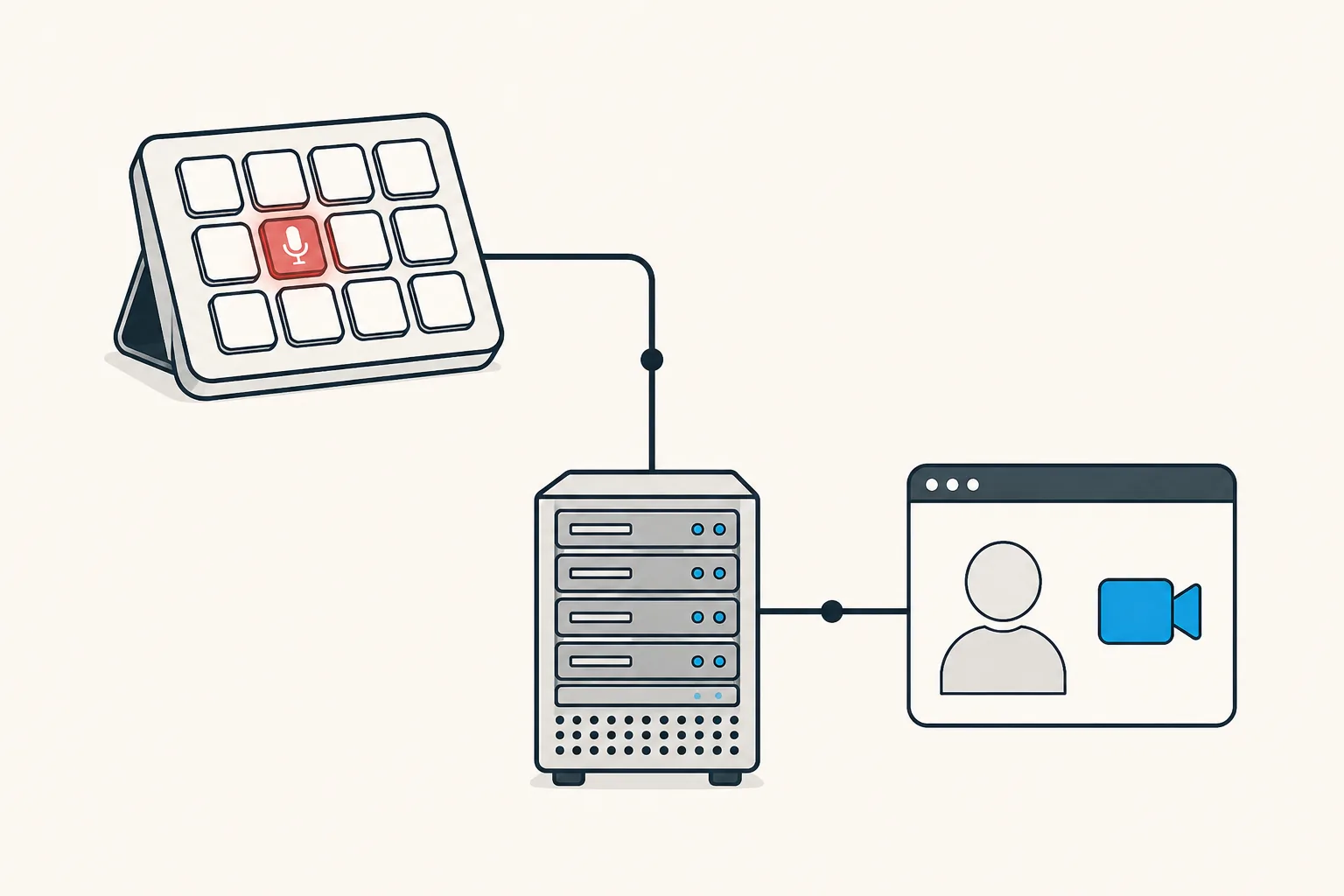
Physical keys on your Stream Deck for Jitsi Meet meetings: toggle mute, toggle your camera, share your screen, and leave the meeting. Each key shows the live state, so a red key means muted before you trust your voice to it. The same keys work in every other meeting app MuteDeck supports, with no profile switching.
- Install MuteDeck on your computer from the downloads page. The 7-day trial needs no account or card.
- Install the MuteDeck browser extension for Chrome, Firefox, or Safari, then open your Jitsi meeting.
- Install the MuteDeck plugin from the Elgato marketplace (one click in the Stream Deck app).
- Drag the buttons onto your deck: Toggle Mute, Toggle Camera, Share Screen, Leave Meeting. They live in the MuteDeck group in the actions list.
- Join a Jitsi Meet meeting and test. The keys light up with your live state; press to toggle.
Jitsi users skew toward people who care where their data goes, so it's worth saying plainly: MuteDeck has no cloud component. The extension talks to the MuteDeck app over your machine, the app talks to your Stream Deck, and nothing about your meetings leaves the building.
Most people settle on one meeting row: mute on the bottom-left key (biggest muscle-memory target), camera next to it, leave meeting on the far right where you won't hit it by accident. If you run a Stream Deck profile per context, put the MuteDeck keys in your default profile. Meetings interrupt everything, so the buttons should be everywhere.
Your Stream Deck already has the buttons.
MuteDeck is the engine that connects them to Jitsi Meet and every other meeting app you use. Everything runs locally on your machine: no cloud, no account.
Does this work with self-hosted Jitsi instances?
Yes. The MuteDeck browser extension works with Jitsi Meet in the browser, whether that's meet.jit.si or your own deployment.
How does the connection work?
The extension (Chrome, Firefox, or Safari) connects the Jitsi tab to the MuteDeck app on your machine, and your Stream Deck controls that. No cloud service in the loop, which tends to be the point of running Jitsi in the first place.
Does the key work when the Jitsi tab isn't focused?
Yes. Jitsi's own M/V shortcuts need the tab focused; the Stream Deck key doesn't.
Does the key show my live state?
Yes, red means muted, synced with the meeting's real state.